
Easton Previous Residents by Era
Start with the Easton source that matches the period, not with a broad name search. Easton property cards and recorded deeds are strongest for ownership. Poll and tax books, directories, census schedules, newspapers, and vital-record research can add a household layer. Some of these Easton sources are online, while others require staff help or an in-person visit. Easton’s materials are especially important because earlier land records may use villages, boundaries, or neighboring owners instead of a modern street number.
| Easton source | Years it covers | Where held | What it can show |
|---|---|---|---|
| Easton Registry historical index books | 1686–1795, 1795–1840, 1840–1866; alphabetic 1867–1880 and 1881–1910 | Northern Bristol Registry online images | Easton grantor or grantee leads and book/page references |
| Easton Registry inquiry and images | Inquiry advertises 1735–current; office states images from 1751 and online indices 1951–current | Registry portal and Taunton office | Easton recorded instruments, parties, and document images |
| Easton poll and real-estate tax books | 1853–1960 | Easton Historical Society | Easton tax and civic history leads |
| Easton Resident and Business Directory | 1889 | Verified in the Easton historic-district report | Dated Easton directory checkpoint |
| Easton Sanborn maps | 1903, 1911, 1925, 1925–43 | Library of Congress collection | Easton structure, use, and address context, not owner names |
| Easton Journal | Bound 1994–2015; digital 2015–2018 | Easton Ames Free Library | Easton notices, obituaries, and address clues |
| Easton vital-record research | 1841–1935 at State Archives; 1936–present at RVRS research room | State Archives or RVRS, depending on date | Easton event-based family evidence subject to access rules |
For a recent Easton property, begin with the Easton assessor card and Registry. For an older Easton gap, move into the index-book images and then add the historical collections. A property card’s owner history is useful direction, but it is not proof that a named owner occupied the house.
Easton Previous Residents Property Card
The Easton property-card portal starts a backward Easton trail from the current address. Search by location, then preserve the parcel’s current owner, MBL or map identifier, prior-owner entries, transfer dates, and book or page references shown on the card. Those fields make the property card a directed index into the Easton Registry instead of a vague surname search. Match the Easton street spelling and location to the map before moving backward.
The Easton card can also show assessment history, sales history, building and permit-related context. Its owner field identifies an assessment account or owner of record, not necessarily a household. A mailing address may be different from the situs, and an Easton trust or entity needs its own Registry search. These role differences matter when tracing past residents of an Easton address.
Note: Save the date you checked the card, because assessment records and their display fields can change over time.
Easton Previous Residents Registry Layers
The Northern Bristol County Registry has three Easton historical statements that must be read together. Its Recorded Land Inquiry says index data begins April 4, 1735 at Book 24. The Registry public-records page says document images reach back to 1751 and describes online indices from 1951 through the current day. Historical Easton grantor-grantee index books fill part of the earlier trail. These are different access layers, not interchangeable promises that every early document is fully searchable in a modern fielded form.
For 1735 through 1950, use an Easton inquiry hit as a lead and confirm it in the image books, an instrument image, Registry assistance, or an in-person book. For the oldest materials, check the town and boundary context before calling a record an Easton address. Easton was incorporated in 1725, while the index-book series reaches into a period without today’s address system.
The Northern Bristol County Registry office is at 11 Court Street, Taunton, MA 02780, 508-822-0502, Monday through Friday from 8:00 a.m. to 4:00 p.m. Public viewing is free; office copies and online document prints cost $1 per page. Use its public-records request path for older images or a specific index question.
The Registry public-records request page explains an Easton previous residents fallback when an older image or index needs staff help.
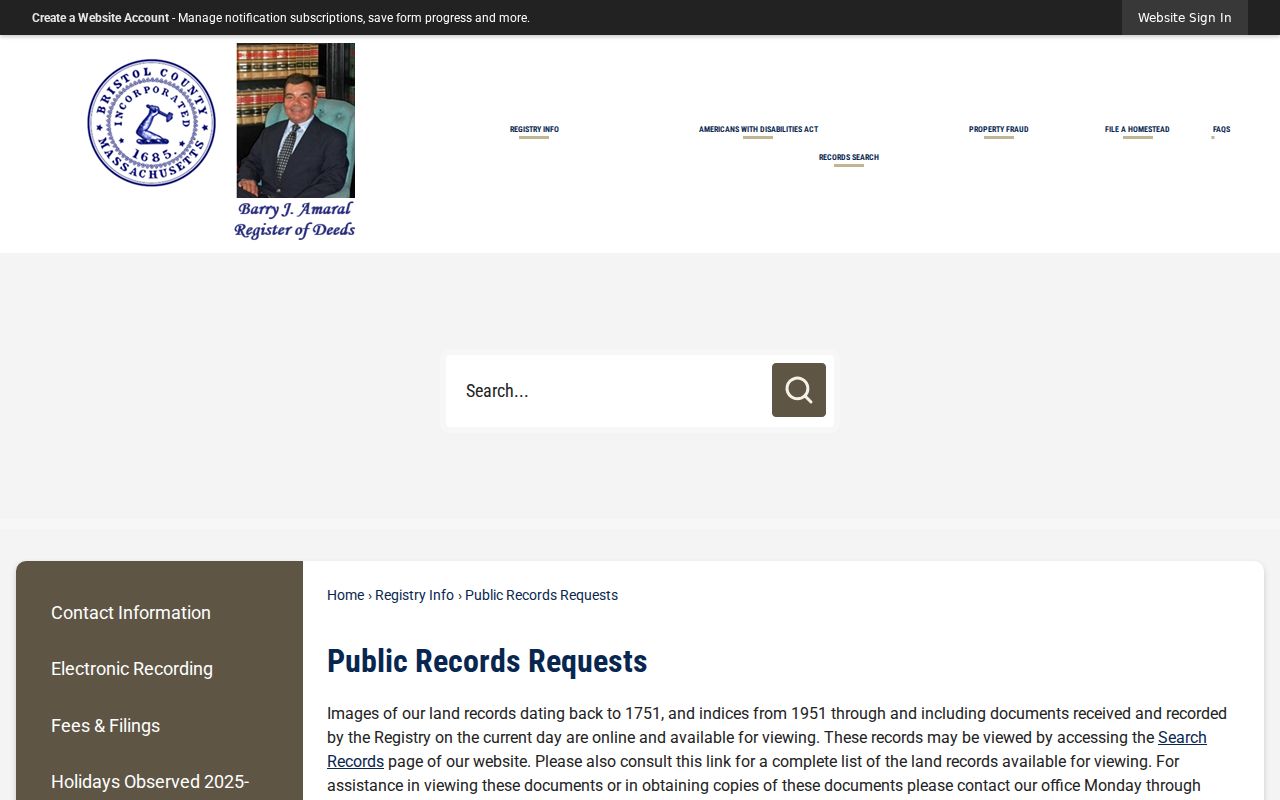
The request route is useful for an identified record or a narrow date-and-parcel question, not for asking the office to create a house history.
Easton Previous Residents Deed Chain
The Easton recorded deed chain follows ownership backward from a known parcel. Take the current Easton card’s prior-owner row, book/page, and transfer date into the Northern Bristol Recorded Land Inquiry. Search the buyer’s acquisition as a grantee, then search the seller as a grantee to locate that seller’s earlier purchase. Where an Easton deed cites a prior book or page, follow that reference as well. This process can reveal owners who never appear in a modern directory.
- Record the current Easton property card’s situs, map or lot reference, current owner, and any prior-owner or book/page line.
- Locate the present owner’s acquisition deed by party name, town, date range, and document type.
- Identify the grantor, then search that person or entity as a grantee to find the earlier transfer into that ownership.
- Repeat the name, date, legal-description, and book/page checks for each transfer. Test spelling variants, trustees, estates, and entities.
- When the modern result thins out, read the historical index images or ask Registry staff for the correct older index path.
- Grantor and grantee
- The grantor conveys an interest; the grantee receives it. They identify a transaction role, not a residence.
- Chain of title
- The sequence of recorded transfers or interests tied to one parcel.
- Legal description
- The land description in the instrument. It can be more durable than a street number in older records.
- Book and page
- The Registry reference used to open or locate a recorded instrument.
The Registry document-image search supports this Easton previous residents step after a book, page, date, or document number is known.
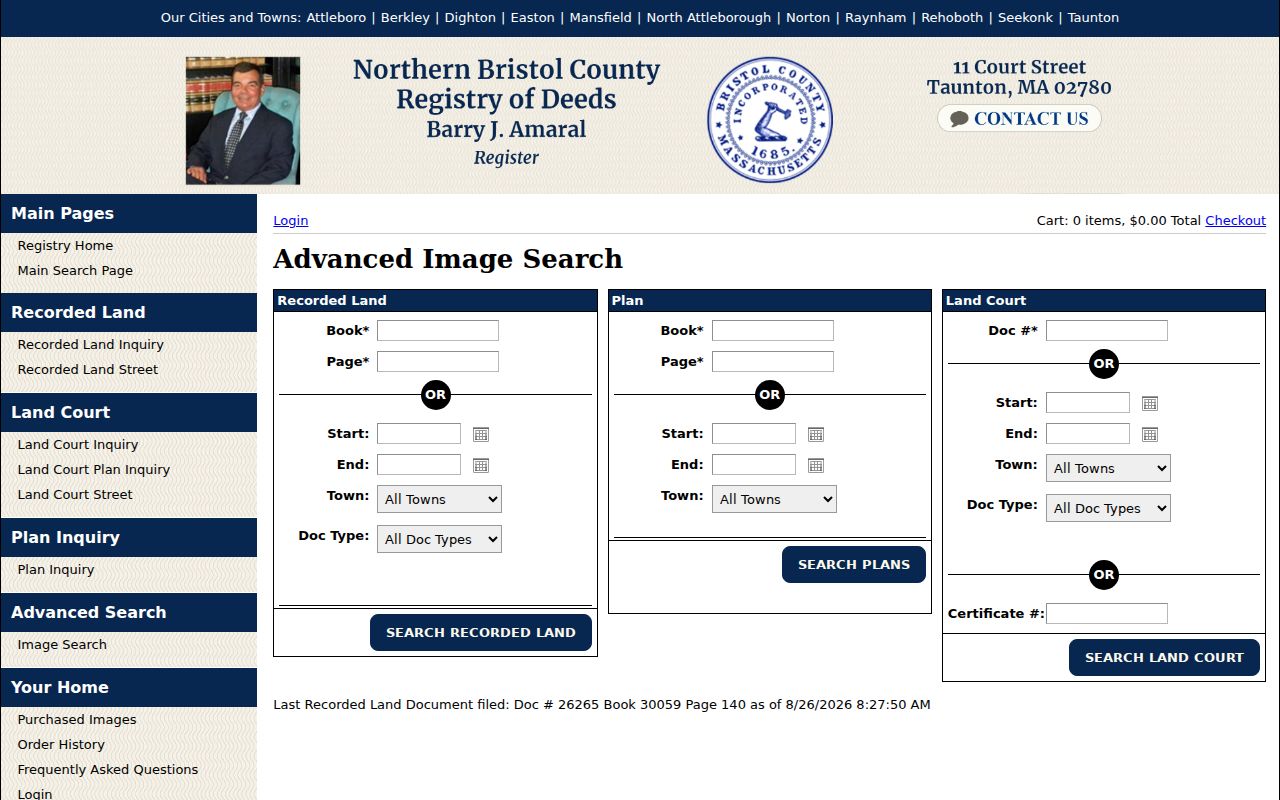
Read the image and its legal description rather than relying only on an index row, especially when the street number is missing.
Easton Previous Residents Index Books
The Northern Bristol historical grantor-grantee index books are image pages, not a modern OCR search. They provide Easton-relevant runs for 1686–1795, 1795–1840, and 1840–1866, followed by alphabetic grantor and grantee sections for 1867–1880 and 1881–1910. Work one letter range at a time, copy the name exactly as written, and follow its book/page reference into the Easton recorded-land records.
Historic Easton spellings, village names, farm descriptions, nearby owners, and old boundaries are expected. A missing modern address does not mean the parcel or family was absent. Match the current Easton parcel’s legal-description clues with the deed’s boundary language and the sequence of owners. This makes the index books a useful bridge for Easton past residents research, while still limiting the claim to what the record actually says.
The historical index-book page is shown below as the early Easton previous residents research route.
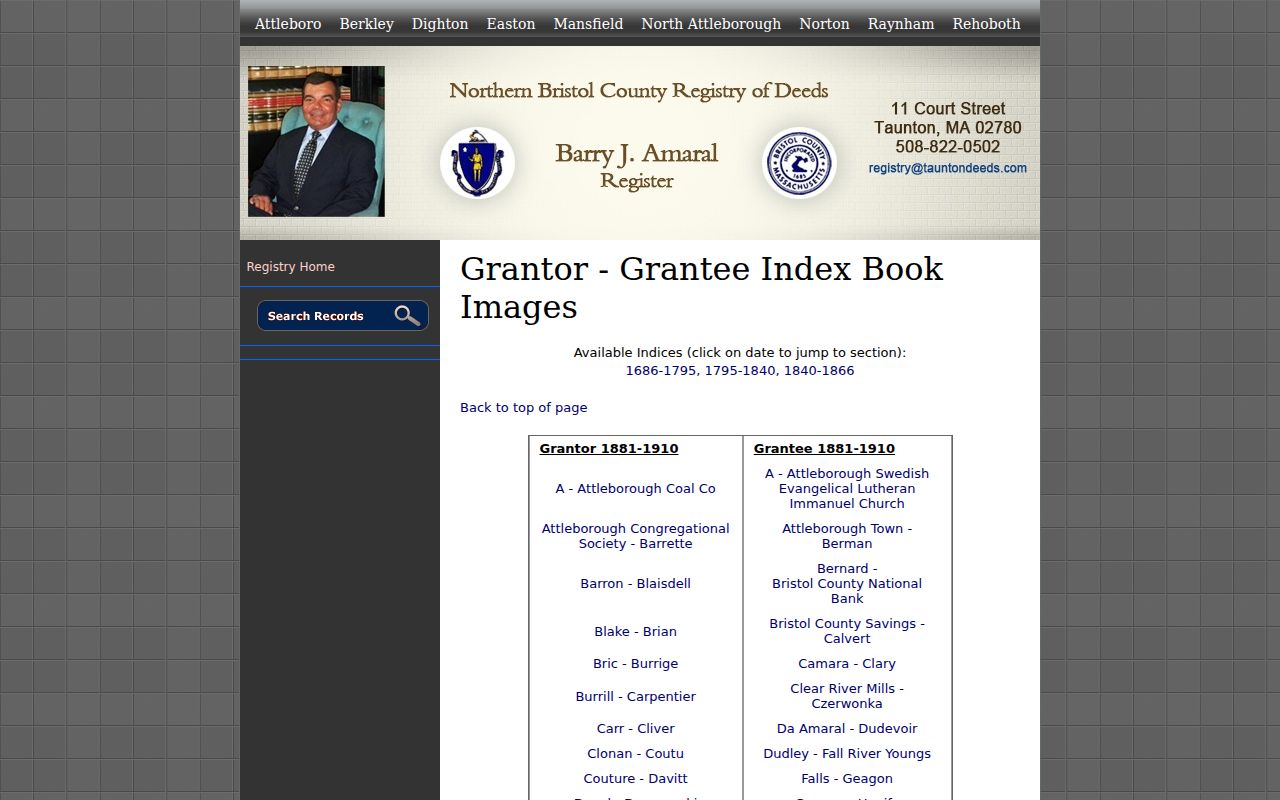
The image-only format is why transcription, letter range, book, page, and image date belong in the research notes.
Easton Poll and Tax Records
Easton’s historical record shelf has a particularly useful local span: the Easton Historical Society holds Easton poll and real-estate tax books for 1853–1960, identified in the official Ames Historic District Expansion report. These are stronger Easton address-history leads than a generic name search because they can connect tax and civic records to a period between deeds. Access is staff-mediated, so approach the Easton Society with an address, map or lot clue, village name, and a reasonable time range.
The Easton Historical Society research service also identifies family, neighborhood, cemetery, ledger, church, business, and manuscript material. Its collections can clarify the period around a record, but an entry in a tax book or local collection does not itself prove that a person lived at a particular house.
Easton Previous Residents Household Pairing
Easton owners are only part of an address history. To ask who lived here before, pair a dated Easton directory or newspaper clue with the closest public federal census, then compare both to the deed chain. The verified Easton directory landmark is the 1889 Resident and Business Directory, published by Local Directory Publishing Co. in Needham. The State Library lists Easton city directories for selected years from 1889–1942, but the exact selected-year list and page-level entry format were not text-verified. Do not assume a continuous annual series or invent what a directory entry contains.
- Choose a deed-transfer date or tax-book period and look for the closest available directory or newspaper year.
- Record the spelling, village or street wording, source date, and whether the item is a directory, notice, or advertisement.
- Pair that date with a public federal census release. The 1950 census is the latest public decennial census, while most 1890 schedules were destroyed.
- Compare household names and structure context with the parcel and deed chain, then label every match as a dated listing rather than a timeless residence claim.
Ames Free Library offers the local history, newspaper, and genealogy access points for these checks. The historical collections themselves are described on the Easton city directory page.
Note: A directory or census entry can strengthen a date-specific household trail, but it should not overwrite the role stated by the source.
Easton Sanborn Structure Checks
Easton Sanborn fire-insurance maps can test whether a structure and address context line up with an Easton past-residents timeline. Easton maps identified by the local historic report cover 1903, 1911, 1925, and 1925–43. They can show structures, construction or use, and location clues. They do not identify building owners. Use them to check the physical setting after an Easton deed, directory, or census result supplies a date.
For old address mismatches, compare a Sanborn footprint with the current parcel and any village name in the source. A useful conclusion is that a structure appears in a period, not that a particular household owned it. The local report also warns that no continuous twentieth-century Easton business-directory run was located, making maps and newspapers important bridges between verified directory years.
Easton Journals and Vital Access
Ames Free Library’s newspaper holdings provide another Easton date layer. The Library lists bound Easton Journal volumes from 1994 through 2015 and in-library digital Easton Journal access for July 2015 through December 2018. It also identifies Easton Bulletin runs and points to older microfilm. Easton newspaper notices and obituaries can supply a surname, family link, neighborhood, or date to test against an Easton deed trail, but they must be cited by publication date and not treated as legal title evidence.
For a family-event question, Massachusetts directs researchers to different vital-record custodians by event date. The State Archives holds 1841–1935 research material, while the RVRS research room handles 1936–present records in person, by reservation, with no walk-ins and no online research-room records. The 1931–1935 transition moved to the State Archives, so confirm custody before a request. Access rules, including restrictions for recent records, still apply.
Easton Previous Residents Limits
A deed chain establishes recorded ownership or an interest, not a complete history of occupants. An assessment card may show an owner or mailing recipient; a tax account may show a billing name; a permit may name an applicant. A directory, census, newspaper, cemetery record, or vital record has its own date and access rules. Protected voter information, sealed material, and Address Confidentiality Program records must not be used to infer someone’s actual residence.
Lawful use. Easton past-residents research is appropriate for family and house history, estate work, or civic curiosity. Do not use a record trail to stalk, harass, track, or expose a living person.