
Finding Easton Residents by Record
Easton keeps its records by subject, not in one municipal roll. Know an address? The Assessors' property card comes first. The Northern Bristol County Registry of Deeds can then test the ownership trail. Know a name instead? A lawful municipal voter-list request, the Massachusetts court docket, or a dated local directory. Each may confirm something different. Owners, applicants, court parties, and old-directory names are not automatically current residents. Save each record's date and role before concluding anything.
Older Easton research shifts toward city directories, poll and tax books, newspapers. Census schedules and deeds round out the trail. Web searches run dry fast. The Town Clerk, Ames Free Library, and Easton Historical Society hold the local fallback. Ask precisely, too. A narrow Massachusetts public-records request can name an existing record. Use an address, date range, or type.
- Search an Easton address in the property-card portal and note whether the person is shown as owner, not occupant.
- Use the parcel identifiers and book/page references to check the recorded-land index.
- For an individual status check, use the state voter tool only for the voter whose details and consent are supplied.
- Match historical names to dated directories, newspapers, census, or Historical Society collections.
- Ask the proper custodian for a missing existing record, naming the address, period, and format wanted.
Easton Resident Records Offices
Four offices anchor the Easton residents directory trail. The Assessors tie an owner of record to a parcel. The Registry indexes recorded interests and their images. The Town Clerk is the local route for municipal voter material and town-held records. The library and Historical Society preserve what modern portals skip. For a full address chain, use the Easton street directory method rather than treating one property-card name as proof of residence.
Massachusetts Elections
Individual voter status
Boston, Massachusetts
1-800-392-6090
Easton Property Cards and Parcels
The Easton property-card portal accepts an owner name, location, MBL, unique identifier, or property-use filter. Results list street name and number, unit, owner name, unique ID, MBL, use, acres, zone, and buildings. A linked card goes deeper. Assessment, sale, map, GIS, and prior-owner data appear there. It anchors an address-first Easton residents directory search. The card names an assessment account, not a household.
The Town GIS adds parcel shape, abutters, zoning, and layer context. Search an address, then select the black parcel point. Use Layers for zoning or Aquifer Protection District information. Check the map or card date before trusting a current display. The state property map helps when a Massachusetts-wide comparison is needed, but the Easton assessor and Registry remain the local custodians.
Note: A site address is where the land sits, while a mailing address is where notices go, and the two can differ.
Open the Assessor search interface before entering an address.
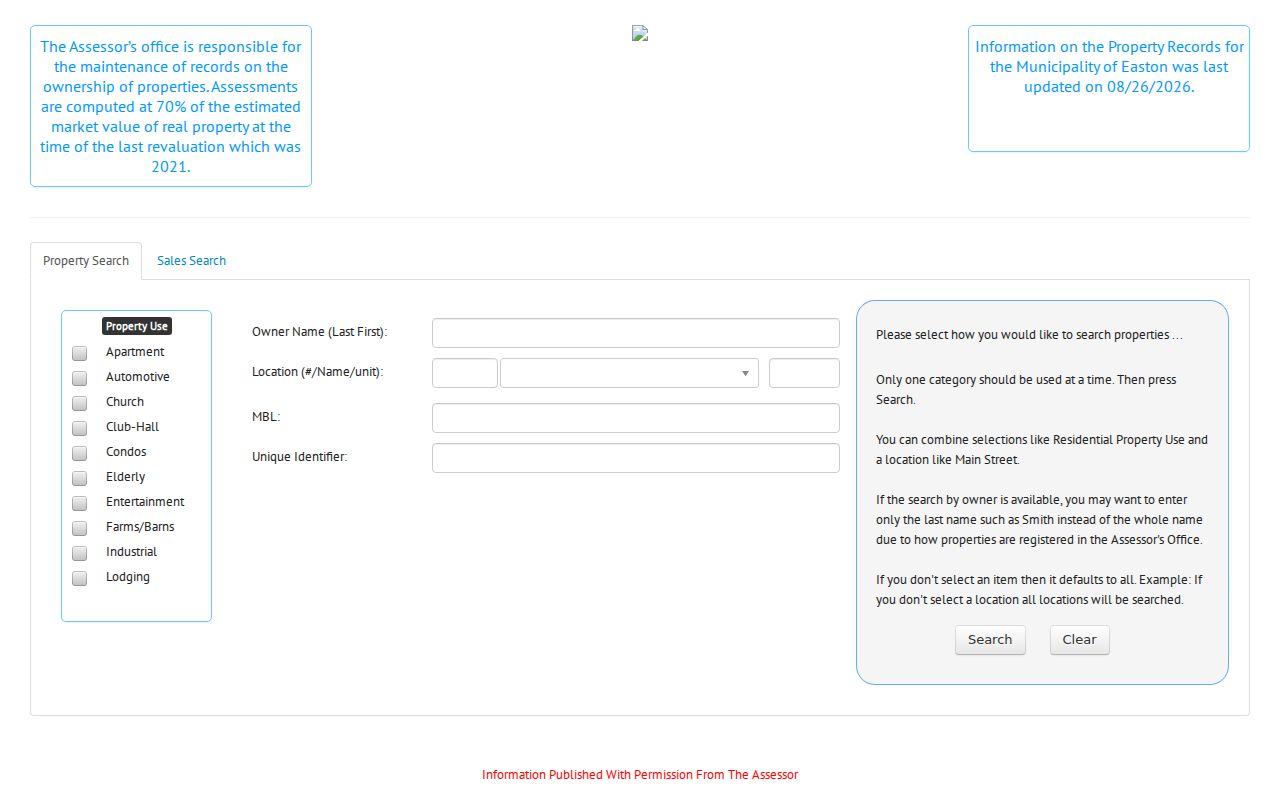
The search controls support an address-led Easton record trail, and they present no public occupant list.
Easton Assessor Search Fields
Use only the fields that narrow the record. A broad name search mixes owners with similar surnames. Location works better. Treat house number, street, and unit as separate controls. The portal expects owner names entered last name first, and blank fields return a broader set.
| Easton field | Use | Result role |
|---|---|---|
| Owner Name | Last-name-led owner search | Assessment account name |
| Location | House number, street, and unit | Situs-linked parcel |
| MBL / Unique ID | Parcel identifier | Crosswalk to GIS |
| Property Use | Optional class filter | Property category |
Take a prior owner or book/page reference from the property card straight to the Registry instead of guessing which similarly named party belongs. Guesswork creates false matches.
Current Easton Resident Sources
No current Easton residents directory lists every household. Each current source shows a narrower role. Keep that role visible in your notes, especially when an owner, a tax recipient, and an applicant differ. The state voter form checks one person's status. It requires first name, last name, date of birth, ZIP, and consent. A municipal list is a separate Town Clerk route, subject to protective exceptions.
| Source | Who It Lists | Keeper | Access |
|---|---|---|---|
| Property cards | Assessed owners and parcel data | Easton Assessors | Free portal |
| Municipal voter list | Dated registered-voter information | Town Clerk | Request, with exceptions |
| Recorded-land index | Parties to instruments | Northern Bristol Registry | Free index |
| PermitEyes | Applicants, owners, and site records | Easton boards | Public portal |
| Community inventory | Local organizations, not households | ECAT | Public page |
For a one-person question, the Easton resident lookup workflow adds the court, vital, and identity checks an address record cannot supply alone. Addresses only go so far.
Easton Deed Indexes Through Time
The Registry's Recorded Land Inquiry advertises index data from April 4, 1735, at Book 24. Registry public-records material separately describes images from 1751. It also describes online indices from 1951 to the present. These are different access layers. Don't treat them as interchangeable. For early work, rely on the historical grantor-grantee image books, Registry staff, or an in-person check. Don't assume a modern query is complete.
The online inquiry is free to search. Narrow it by date, document type, last and first name, grantor/grantee direction, and town. Select Easton and test spelling variants. Search both party directions. Viewing is free, while the Registry reports $1-per-page online printing and office copies. A recorded deed proves a transaction or interest, not where someone lived.
Note: Historical index books are page images, so early research means reading the relevant letter range and following book/page references.
Easton Voter Records and Privacy
Massachusetts keeps two things separate. Your own registration status sits behind a state tool meant for personal checking. A lawfully obtained Easton municipal voter list can carry name, address, party, birth date, active or inactive status, and voter ID data. Protected voters stay out. The statewide file is not a general public directory. Some towns sit above 5,000 people. There, M.G.L. c.51 §55 requires voting lists arranged by street and numerical address.
Easton's 2022 reprecincting notice reported that 5,329 of 9,901 voting addresses changed. Treat that figure as an address-history warning rather than a current tally. Date any voter-list result you use. Never infer someone's location from a substitute address or a protected entry.
Check the state voter-lookup form before working with personal status information.
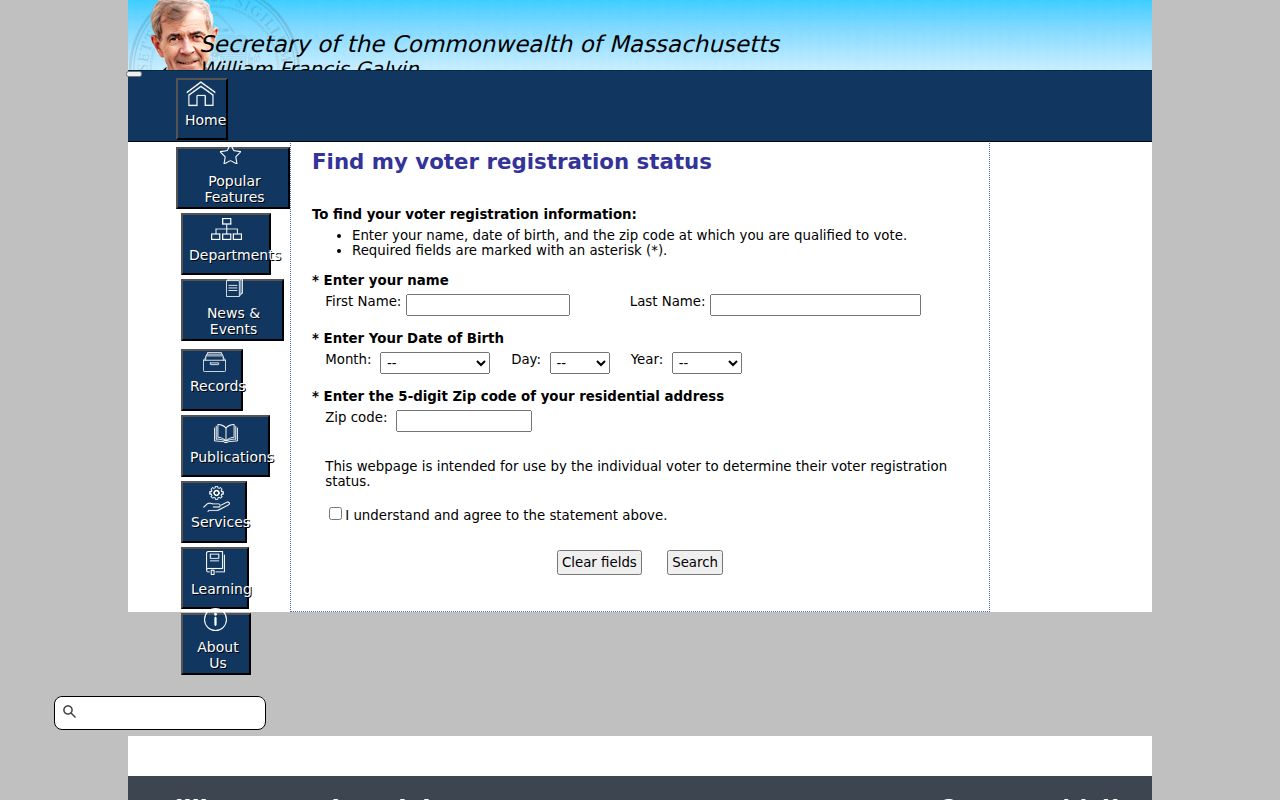
The form asks for identity details and a consent checkbox for a reason. Those are privacy boundaries, not tools for assembling a name list.
Easton Court and Vital Trails
MassCourts lets anyone search a public docket by name, case type, case number, or citation number. Easton district matters route to Taunton District Court. A result may show party or company, case number and type, file date, party type, status, court, and affiliation. Sealed, impounded, juvenile, and other protected matters stay hidden. The clerk keeps the official file. Federal cases go through PACER, which carries its own registration and fee rules.
Vital records follow a separate custody and eligibility path. Massachusetts guidance points requests to the local town custodian, RVRS, the State Archives, or genealogical channels, depending on the event date and record type. Easton library newspapers, cemetery material, and historical collections can help pin down a date or a relationship. They do not replace a certified record.
Read the Massachusetts docket-search instructions for the current public-search controls.
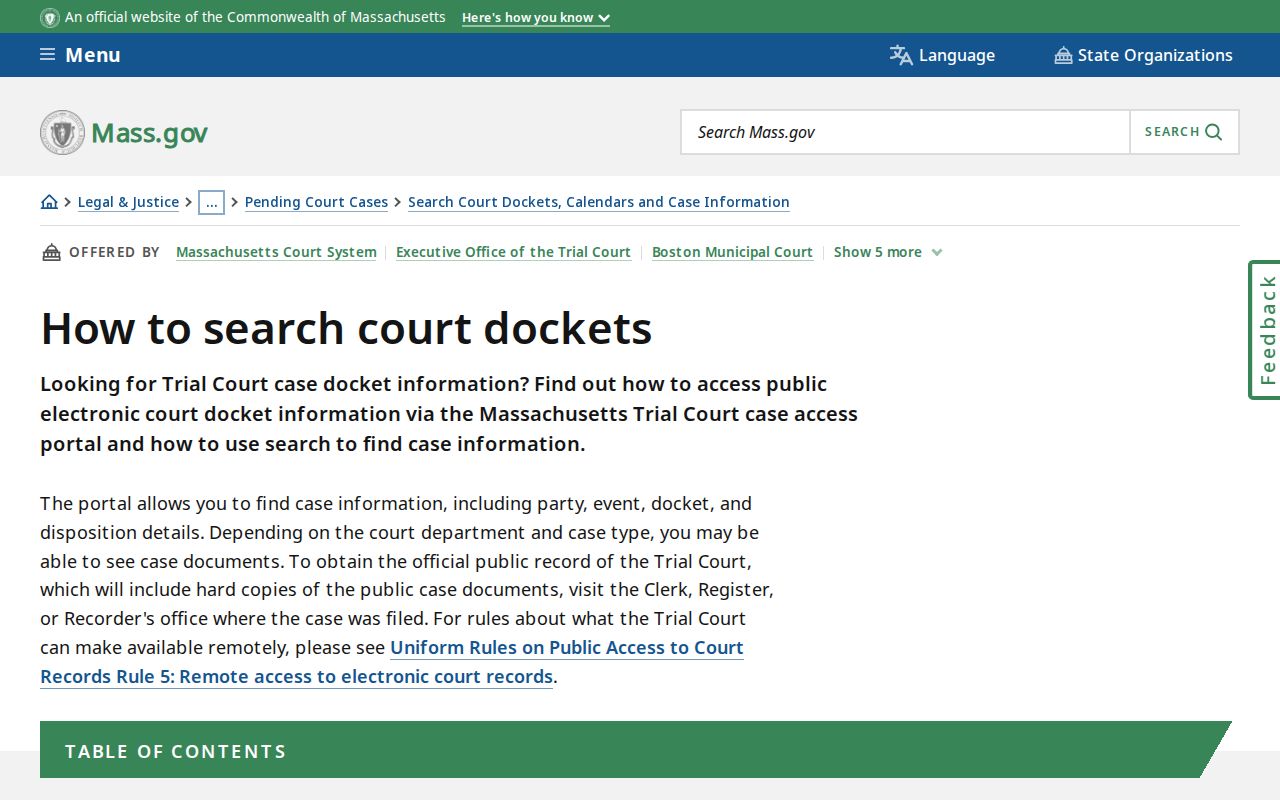
Docket fields help you tell same-named people apart. Use them before asking the clerk to pull a file.
Easton Records Request Fallback
A needed town-held record may not be online. Send the request to the department that actually keeps it. Describe the address, record type, date range, delivery format, and contact information. Massachusetts M.G.L. c.66 §10 generally requires a response within 10 business days. State guidance permits asking for a fee estimate and electronic delivery. It never obligates an office to create a new analysis.
Easton Police accepts requests by email, mail, or in person through its records process. The Building Department's historical information-request form is the more property-specific route. Both channels can return records shaped by exemptions, redaction, availability, and fees. A narrow request makes it far easier for staff. Staff can then locate an existing map, permit, report, or file.
Consult the Massachusetts request guidance before sending anything.
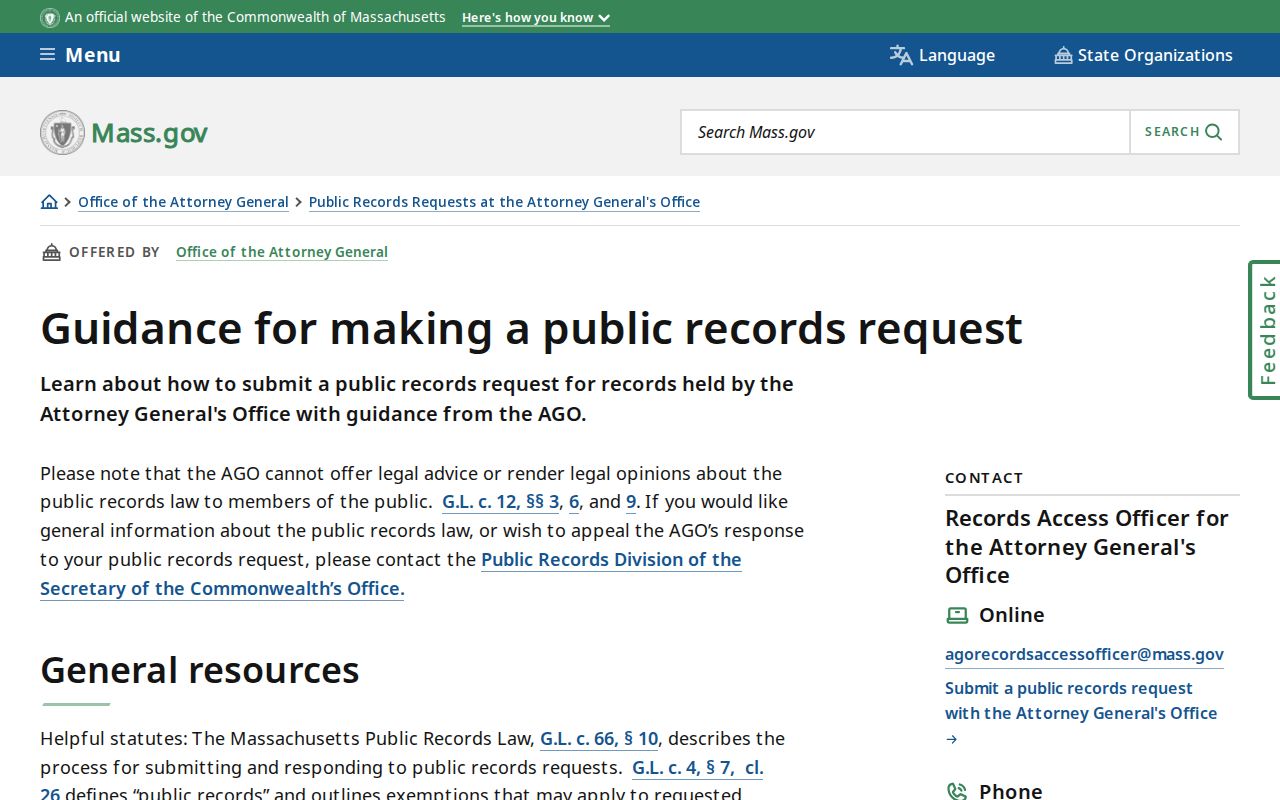
The state guidance helps turn a broad person question into a custodian-specific record request.
Easton Maps, ZIPs, and Addresses
Postal codes help as search terms but prove little else. They are not town boundaries or evidence of who lives at an address. Official local sources use 02356 for North Easton and 02375 for South Easton, while 02357 appears for Stonehill College and 02334 in local postal context. Verify every deliverable address with USPS first. Then use the assessor or Town GIS to confirm which jurisdiction holds the parcel. The MassGIS map supports statewide comparison, yet it cannot replace local parcel evidence.
The Massachusetts interactive map and its parcel-data updates add another view. Easton appeared in the May 2025 and April 2026 MassGIS update batches. Parcel layers change, so record the map date alongside any observation.
Open the Massachusetts interactive property map for the statewide map controls.
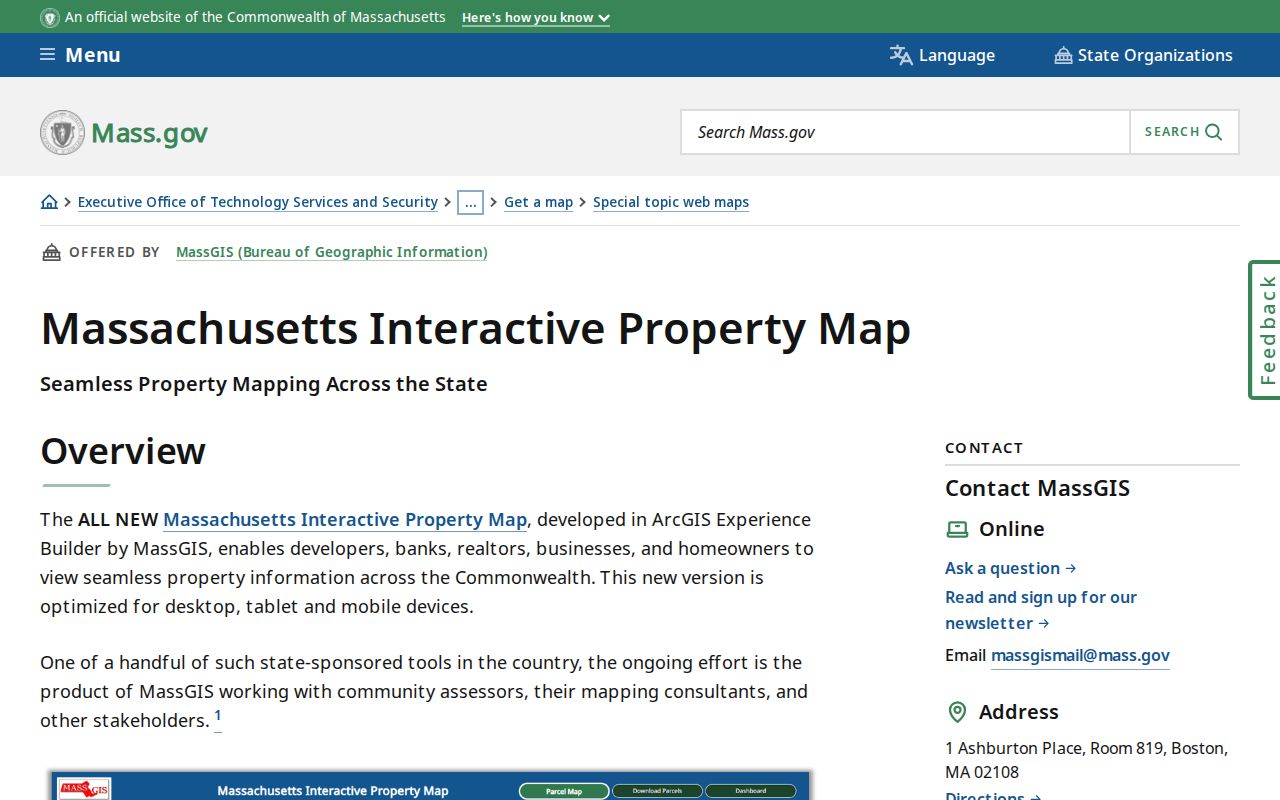
Use a map to compare geography, then go back to the Easton custodian for the local property record.
Easton Source Roles Compared
Official records and commercial compiled search products are different animals. An official source shows its custodian, date, field labels, and access limits. A compiled result may be stale. It may merge strangers who share a name. It may also leave the record role out entirely. Family history and estate questions deserve the same discipline. So do reconnecting, civic research, or a property question. Start with the official source that owns the record. Then confirm any match against an independent category.
| Source type | Strong for | Not proof of |
|---|---|---|
| Property card | Owner and parcel history | Current occupancy |
| Recorded deed | Recorded interest or transfer | Household membership |
| Voter list | Dated registration address | Unprotected current identity |
| Directory or newspaper | Dated historical connection | Modern residence |
Easton Historical Resident Directories
Easton's verified directory trail runs strong but not continuous. The official historic-district report identifies the 1889 Resident and Business Directory for Easton, Mass., published by Local Directory Publishing Co. in Needham. The State Library holds Easton city directories for selected years between 1889 and 1942, though the exact selected-year list still calls for a shelf or catalog check. The Easton city directory page carries the full collection work.
Ames Free Library's staff-retrieved Historical Collection, local newspapers, in-library databases, and the Historical Society's poll and real-estate tax books covering 1853 through 1960 stretch the search past one printed volume. The Historical Society also points to town reports, cemetery material, neighborhood collections, and a photo collection searchable by street, individual, or business. Easton's 2025 tricentennial oral-history project adds context. Cite oral history as community history, never as legal proof of residence.